Posts

Let Them Eat Cake

Image
Welcome to my first action project for Ollywood. Ollywood is an elective course with 3 units, Pre-Production, Production, and Post-Production. We just wrapped up the first unit, Pre-Production. In this unit, we learned about jobs that need to happen before shooting a film. Screenplay, storyboards, location scouting, and production design are all jobs that take place in Pre-production. We did a little activity where we were split up into assigned groups based on the genre of film we were given. With the genre of film we were assigned to, we had to find a location that would be appropriate to our genre and hypothetical film there. The genre I had was, action film: chase scene. I did a little research on where popular action films have filmed chase scene in Chicago and I came across Lower Wacker Drive. Films like Wanted, The Dark Night, The Blues Brothers, and many more has filmed at Lower Wacker Drive. I chose Lower Wacker Dr. as my appropriate location to film an action chase scene. Luc...

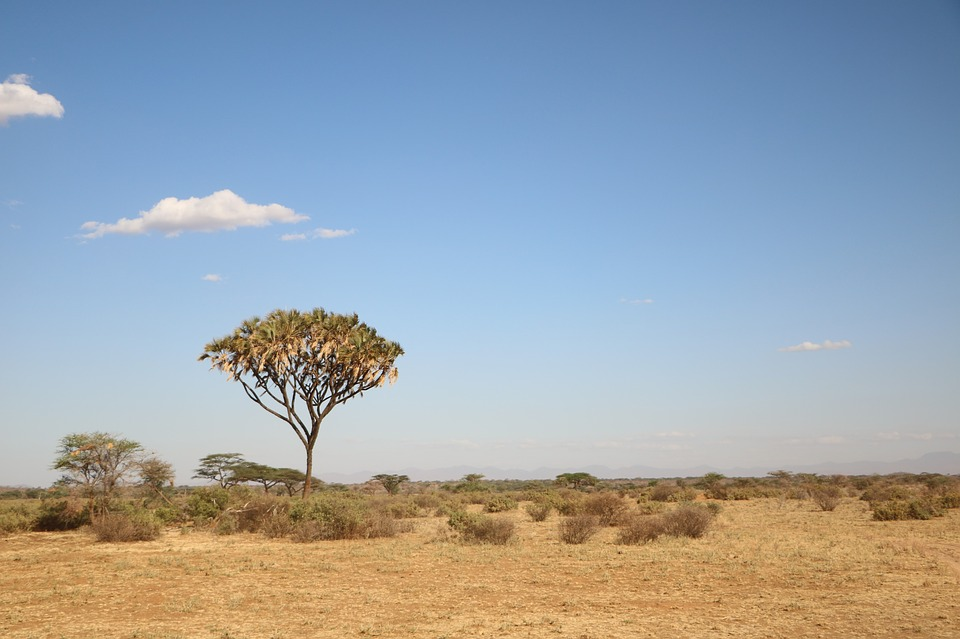
Humans vs. African Painted Dogs, Who Will Win?

Image
Welcome to the last unit of Population! This unit was 3 weeks and we covered a lot of information. We talked about symbiotic relationships, growth in populations, line graphs, arithmetic and geometric sequences, and Thomas Malthus. The guiding question for this action project , How does human population growth affect other populations? In order to approach this question, I will be comparing the African Painted Dogs to humans and see the difference in population growth. Symbiotic relationships are interactions between two organisms. There are 7 different types of symbiotic relationships. All organisms interact in different ways. Sometimes they benefit from one another for an example, Bees and flowers. Bees provide flowers with the mean to reproduce and flowers provide bees with nectar and pollen. Sometimes organisms compete against each other for an example, Tigers and Lions. Tigers and Lions could compete for the same prey. For this action project, we were asked to compare our organis...

A Hero's Journey!

Welcome to the last Action Project of the Stories. Stories is a humanities course that the sophomores of GCE Lab School take. There are 3 units in this course, and we just wrapped up our last unit of this course. In this unit, we talked about Joseph Campbell's Monomyth-- the 12 stages of a hero's journey. Those 12 stages are Call to Adventure, Refusal of Call, Supernatural Aid, Crossing 1st Threshold, Belly of the Whale, Road of Trial, Meeting with the Goddess, Temptation, Atonement with the Father, Apostasis, Ultimate Boon, Refusal of Return, Magic Fight, Rescue from Without, Crossing Return Threshold, Master of Two Words, and Freedom to Live. For this action project our guiding question was, How do you analyze a hero? We were asked to compare 2 heroes. One fictional hero and one real life hero. The heroes that I chose to talk about were my brother, Leandre and the Flash from the television series named The Flash. I chose the Flash as my fictional hero because he has all the ...

Who's The Boss Now?

Image
Welcome to my second action project of Population! This unit we focused on animals environment and habitat. In this unit we learned box and whisker plots, standard deviation, permutation and combinations, We recently we on two field experiences to the Field Museum and the Peggy Notebaert Nature Museum. At the Field Museum, I was able to see a taxidermy of my animal which was really cool. I got to learn about taxidermy and how it's significant to science. Last action project, my organism was the African Painted Dog. For this action project I wanted to further my research on the African Painted Dog. Below is my continued research on the African Painted Dog. This time we went more in-depth on the environment of our organisms. Our guiding question was, How can you portray the evolution of a species? Habitat : African Painted Dog are mostly found in African plains such as, grasslands, open woodlands, and savannas. In the savanna there are two seasons, winter and summer. During the...

Lycaon Pictus

Image
Welcome Hello! Welcome to my first action project for my STEAM course named Population. In this class we learned about taxonomy, sets and subsets, Carl Linnaeus, and more. Over the summer, we were assigned to read a book named, In The Shadow of Man by Jane Goodall. I enjoyed this book because I got to learn about some similarities and differences between chimpanzees and humans. It actually turns out that there are a lot more similarities than differences. We also took a Field Experience to the Lincoln Park Zoo, where we chose an animal and observed its behaviors. I chose the African Painted Dog. I chose this organism because I did not have much knowledge about them so I thought that it was the perfect opportunity for me to learn about them. Below is some research that I gathered up about African Painted Dogs. Intro The largest populations of the African Painted Dog remains in Southern Africa and some parts of southern East Africa. African Painted Dogs are usually social and tra...

All Dough

Hello, welcome to Food. The freshmen at GCE Lab School have been baking bread. Now you might be confused as to why a school is making their students bake bread instead of doing work from their textbook. But this is not a traditional school. We just wrapped up our unit 2 for our STEAM class called Cooking. We started this unit off by kneading flour and water. We went on 1 field experience to Big Delicious Planet, which is basically a restaurant that has a farm right next to it. They grow their own food so they are very organic. I think this restaurant inspired us to make and bake our own bread with a leading question of: Does using different leavening agents affect the outcome of our bread? There were 5 different groups for the 5 different kind of breads that we baked. My group had Homemade Sourdough Bread. To find out how our bread turned out continue reading!